Christians and Politics: How to be ‘Light’ in our Government

Regarding Christians and politics: Christians do not all agree about how involved they should be in politics. Some Christians avoid political engagement because they do not want to impose their beliefs on others, while others believe they should influence public life. This article considers what it means to be “salt and light” and how biblical principles can guide Christians as citizens. 

In today’s political climate it can be easy to wonder whether one vote can make a difference. 

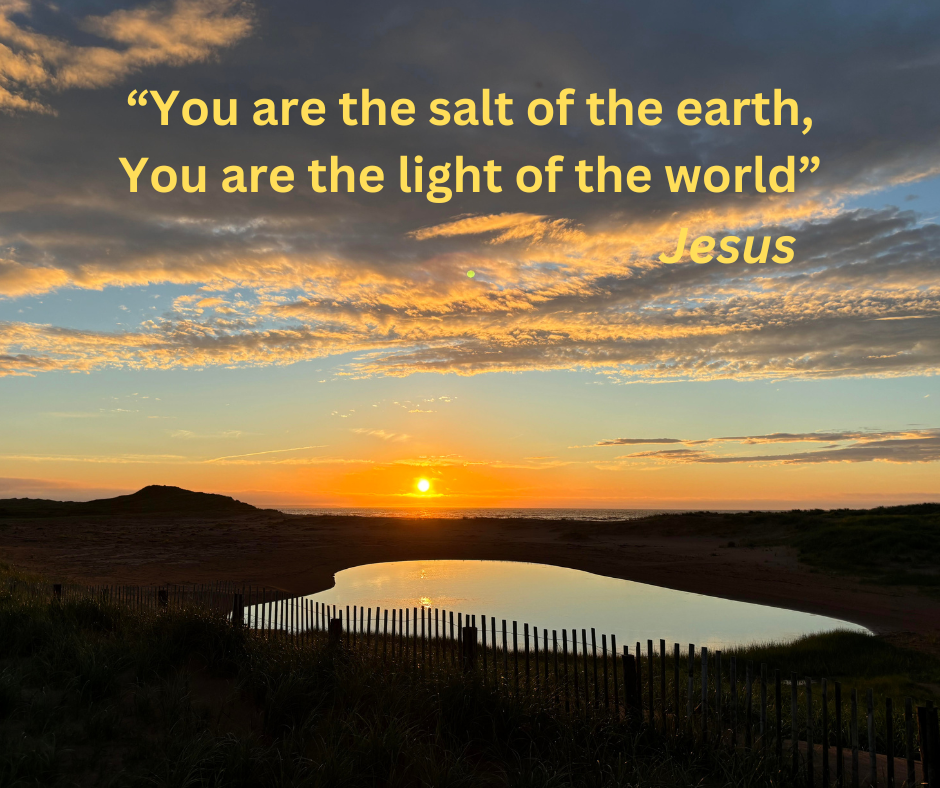
Some Christians believe that they should not engage in politics as they believe that it would be “imposing their morality on others.” However, Jesus commands us and encourages us to be salt and light in a dark world. Matthew 5:13-16

What was Jesus saying to his disciples when he said You are the salt of the earth?

Christians and politicsTo consider this question biblically, we first need to understand what Jesus meant by being ‘salt and light.’ He said that the disciples were like salt because salt… 

  • was a precious commodity. 
  • is a preservative and Christians, followers of Christ, are to be like salt and have a preserving influence on their culture. 

What was Jesus saying to his disciples when he said You are the Light of the world?

In addition to preserving what is good, Christians are also called to bring light where there is confusion and moral darkness.

  • Don’t  hide your light under a basket instead, put it on a lampstand where it gives light to all. Matthew 5:14-16 
  • Light dispels darkness and Jesus wants all people to walk in His light.
  • Christ-followers are to have concern for not only themselves, but also for others. Jesus said He is the light of the world and we are to be reflecting His light to the culture…the world. John 8:12; John 9:5

Christians and Politics: How Christians Can Influence Culture

If Christians are to influence their culture for good, an important question follows: should this influence extend to public laws?

One way we can do that is by influencing our government leaders to legislate moral laws. Laws cannot change a person’s heart; however, they can restrain harmful behavior and protect those who are vulnerable. However some Christians  disagree with legislating moral laws – citing these reasons: You can’t legislate morality; you have to change hearts first. The job must be done through education and religion.

However, Martin Luther King responded to those reasons saying that they are half-truths. He says, certainly, if the problem is to be solved then in the final sense, hearts must be changed. Religion and education must play a great role in changing the heart. But, he also further stated:

Christians and politicsBut we must go on to say that while it may be true that morality cannot be legislated, behavior can be regulated. It may be true that the law cannot change the heart but it can restrain the heartless. It may be true that the law cannot make a man love me but it can keep him from lynching me and I think that is pretty important.”

(Taken from Martin Luther King, Jr.’s address at Illinois Wesleyan University, Dr. Martin Luther King Jr. – 1966 Convocation – Page 4)

This distinction helps explain why Christian concern for moral renewal can include both changed hearts and just laws.

Furthermore, we must realize that our government does impose morality in many ways. 

“Every time a legislature enacts legislation, it is always an imposition of morality.

Laws against thievery impose the morality of the honest over the dishonest. Laws against prostitution impose a sexual morality. Declaring anything legal or illegal is a statement of morality. Legislation is built upon morality, and morality is built upon religion.” Nelson University

Does the Bible give Christians any insight as to what Jesus would have us do?

Yes, it does.  The Bible offers principles that can guide Christian involvement in civic life. Jesus told his disciples to “Render to Caesar the things that are Caesar’s, and to God the things that are God’s.Matthew 22:21

By that statement, Jesus’ teaching reminds believers that they have responsibilities both to governing authorities and, above all, to God. However, Jesus lived at a time and place where the people lived under the oppression of an imperial dictatorship so there was no opportunity to vote.

Christians and Politics: How should we vote?

In a democracy, one practical way citizens participate in public life is through voting. We can support candidates and policies that most closely reflect biblical values.Christians and politics

This should be the basis of our vote as we consider what the political party stands for on important moral issues. 

“The popular notion that ‘you can’t legislate morality’ is a myth. Morality is legislated every day from the vantage point of one value system being chosen over another. The question is not whether we will legislate morality, but whose morality gets legislated.Chuck Colson

Christians and Politics: Influence Government for Good

At the same time, Christians should avoid two extremes: withdrawing entirely from public life or treating politics as more important than the gospel.

Wayne Grudem wrote a very thorough article, Why Christians Should Seek to Influence Government for Good.  In his article adapted from a chapter in his book, Politics-According to the Bible: A Comprehensive Resource for Understanding Modern Political Issues in Light of Scripture, he addresses five views of Christian involvement that he finds unbiblical and after that offers a more balanced and biblical solution.

He outlines the wrong views and expands on those in his article. I recommend reading his full article HERE.

The following is the outline of the 5 views he believes are unbiblical.

  • Government Should Compel Religion
  • Government Should Exclude Religion
  • All Government is Evil and Demonic
  • Do Evangelism, Not Politics
  • Do Politics, Not Evangelism

He then goes on to list Better Views which show Support for Significant Christian Influence. It is a very good article, again, I encourage you to read it. The link is highlighted above.

He states- and I agree: “I believe that every Christian citizen who lives in a democracy has at the very least a minimal obligation to be well-informed and to vote for candidates and policies that are most consistent with biblical principles.” 

David Glosson in his article, Politics, How Involved Should Christians Be? has this to say:

The Gospel applies to all areas of life, and the Bible instructs us about government and political authority. Scripture advocates neither total withdrawal from the political process nor over investment in it. Thus, we need a third approach, a model in which actively engaged Christians faithfully apply Biblical principles to the current political challenges. But what does this model look like? What are the principles that can help us navigate our divisive political landscape? 

A Christian approach to Political Engagement

In his article, 5 Ways for Christians to Engage Politics, Adam Ch’ng offers practical guidance for Christians who want to engage thoughtfully in national political life. The five points below provide a brief overview; in the full article, he develops each one in greater detail.

  1. Begin with prayer (1 Timothy 2:1–2). Ch’ng reminds us that no amount of lobbying or letter-writing can replace dependence on God. Prayer should be the foundation of Christian political engagement.

  2. Care for politicians. Political leaders are people who need prayer, compassion, and the hope of the gospel.

  3. Do your homework. Take time to understand the issues, the policies being proposed, and their likely effects on people and communities.

  4. Offer counsel, not only criticism (Proverbs 11:14). Rather than simply criticizing leaders, Christians can offer wise, respectful, and constructive counsel.

  5. Maintain a gospel-centred worldview. The gospel does not belong to any political party or platform. Instead, it challenges every human ideology and calls Christians to evaluate all political views in light of biblical truth.

Together, these principles encourage Christians to engage in public life with prayer, wisdom, compassion, and faithfulness to Christ.

The link to Ch’ng’s full article is provided in the Further Reading section below.

Christians and Politics: Final Thoughts

Ultimately, political involvement is not the Christian’s final hope; lasting renewal begins with changed hearts through Christ. The strong Christian influence and biblical standards that once shaped our societies through the nineteenth century have given way to practical atheism and moral relativism. 

Christian influence in public life has declined in many Western societies, while moral relativism has become much more widely accepted. This has resulted in many Western governments supporting and approving sexual behavior that Christians believe conflicts with biblical moral teaching.

Could it be that:

  •  a very significant part of the problem is that Christians are no longer being salt and light in the world, we are no longer salty therefore we no longer preserve? 
  • the way Christians live is not that different from non-Christians?
  •  many Churches are no longer focusing on the gospel message of  Jesus? 
  • Christians have become apathetic about biblical morality and principled leaders?

Ultimately, the moral decline in Western countries is a spiritual problem!

It is important to note that 2 chronicles 7:14 was written to God’s people. Therefore, it is up to us to humble ourselves, commit ourselves to following close to Christ and pray!

We need to pray for healing for our land and 2 Chronicles 7:14 is a great biblical prayer and promise!  

Please follow and like us:
Pin Share

Author

  • Lorna Cameron

    I love to research and write about how we can live in peace, with patience, passion and purpose in our relationships. The most important relationship being with Jesus who died to provide forgiveness of sin for all who will come to Him.

    View all posts